
Ask ChatGPT to recommend a food bank in your county, an adult literacy program or a public radio station worth supporting, and it will give you a short list. Ask Google the same question and an AI summary often appears above the usual links. Either way, the person asking may never scroll through a page of results.
That is how one CBA client noticed a problem. When they asked ChatGPT about organizations in their category, theirs wasn't mentioned.
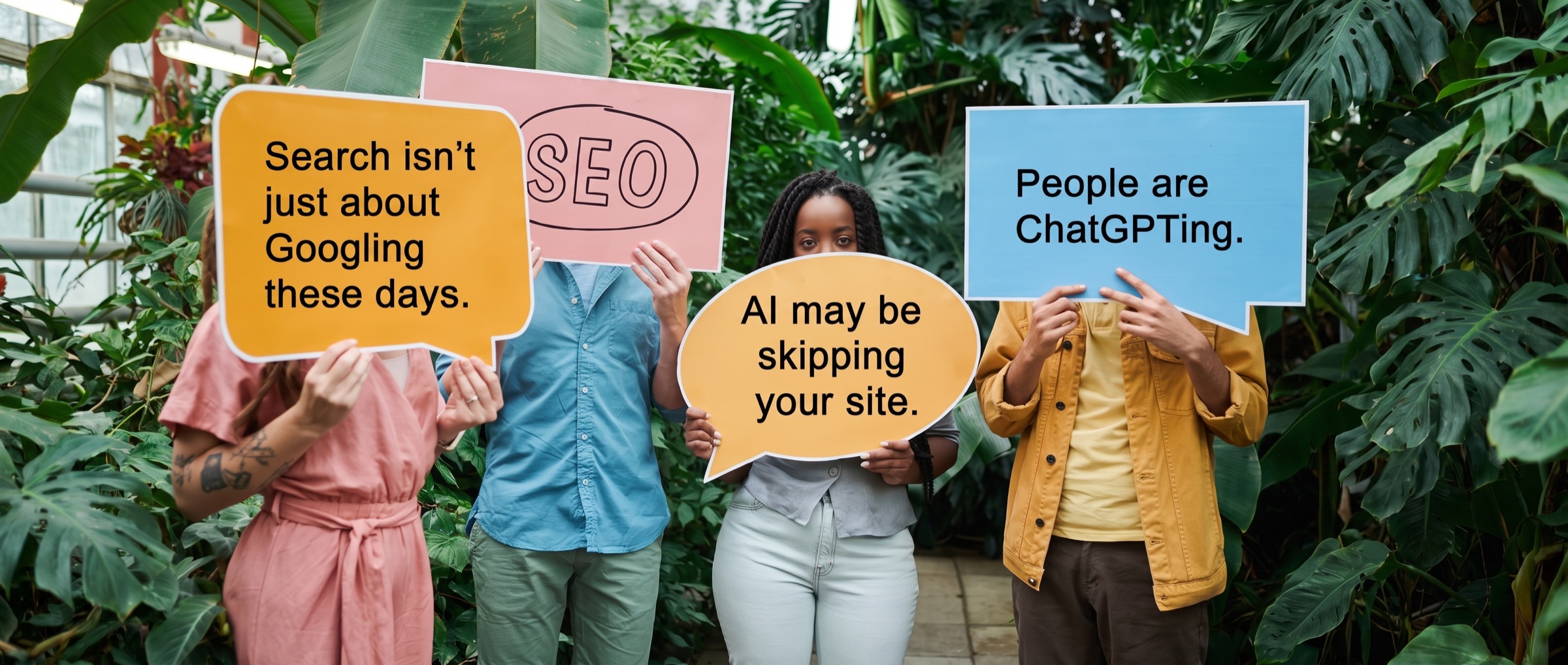
For a nonprofit, the question has grown. It is still "do we show up on Google?" but it is also "when someone asks an AI tool about our cause, are we part of the answer?" Search engine optimization (SEO) helps your pages rank in search results. Generative engine optimization (GEO) helps AI tools like ChatGPT, Perplexity and Google's AI Overviews find, understand and cite your organization. The two mostly point the same way, and a few extra habits make the difference.
How AI tools decide what to say
AI tools answer questions by drawing on pages they can read and trust. When ChatGPT searches the web, it relies on search indexes, including Bing's, and summarizes what it finds, often with links to its sources. Google's AI Overviews draw on Google's own index. So the first requirement hasn't changed: your pages have to be findable, readable and clearly about something.
What changes is how the answer is built. A results page lists ten links and lets the reader choose. An AI answer picks a few sources and quotes or paraphrases them. A page that states a clear answer in plain language, near the top, is easy to quote. A page that buries the point under a long introduction, or puts it in an image or a PDF, is easy to skip. Our look at what nonprofits need to know about digital marketing right now covers how this shift is already changing website traffic.
Answer the questions people actually ask
Start with the questions your supporters and the people you serve bring to you. How do I volunteer? Where does my gift go? Do you serve my town? What do you offer for teens? Each important question deserves a clear answer on your site, written the way you would say it on the phone.
Put the answer first and the detail after it. Use headings that match the question. A short set of frequently asked questions at the end of a program page gives search engines and AI tools a clean question and answer to work with.
Be specific. "We serve families across Westchester and Putnam counties" is far more useful than "we serve our community." Program names, places, dates and figures you can stand behind all make a page easier to cite.
Keep your facts the same everywhere
AI tools build their picture of an organization from many sources, not only your website. If your name, address, mission or programs read differently on your site, your Google Business Profile, your Candid profile, Charity Navigator, LinkedIn and in news coverage, the tools have to guess, and they can guess wrong.
Set aside an afternoon to check where your organization is listed and bring each listing in line with your website. Keep your About page current with your full name, what you do, where you work and how long you have been doing it. That page is often where an AI tool learns who you are.
Make your site easy for machines to read
A few technical steps help every kind of search:
- Keep important text on the page. Words inside images or PDFs, or content that appears only after the page runs scripts, can be missed. Program details, eligibility and contact information belong in regular page text.
- Add structured data. Structured data is code that labels what a page contains, such as your organization's name and address, an event's date or a set of questions and answers. Your web developer or website platform can add it.
- Check that AI crawlers are allowed in. A file on your site called robots.txt tells automated visitors what they may read. Some sites block AI crawlers without meaning to, which keeps them out of AI answers.
- Keep pages fast and easy to use on a phone. It matters to people and to search engines alike.
Earn mentions from sources others trust
AI tools lean on sources that people already rely on. Local news coverage, listings in reputable directories, partner organizations that link to you and your own up-to-date content all add to the evidence that your organization is what it says it is. This is the same work that has always helped search rankings, and now it pays off twice.
Check how you appear, a few times a year
Every few months, ask ChatGPT, Perplexity and Google a handful of questions a supporter might ask about your cause and your area. Note whether you appear, what is said about you and which sources are cited. When an answer is wrong or out of date, those sources show you where to start.
The familiar tools still matter. Google Search Console shows which searches bring people to your site, and Bing Webmaster Tools does the same for Bing, which also feeds some AI search results. Visits from AI tools are beginning to show up in website analytics as referrals from sites such as chatgpt.com, which gives you a rough sense of how often people arrive that way.
None of this means chasing every new tool. Clear pages that answer real questions, facts that match everywhere and a site machines can read will serve you on Google today and in whatever people use to search next.
Frequently asked questions
What is the difference between SEO and GEO?
SEO helps your pages rank in search engine results. GEO helps AI tools such as ChatGPT, Perplexity and Google's AI Overviews find, understand and cite your content. Most of the work overlaps.
Should a nonprofit block AI crawlers?
Some crawlers collect content to train AI models, and others fetch pages to answer searches. A nonprofit that wants to appear in AI answers should at least allow the crawlers that power AI search.
How long before changes make a difference?
Search rankings usually respond over weeks or months. AI tools that search the web as they answer can reflect changes sooner, while their general picture of your organization changes more slowly.